Sofirn SP35 vs Sofirn SC31 Pro
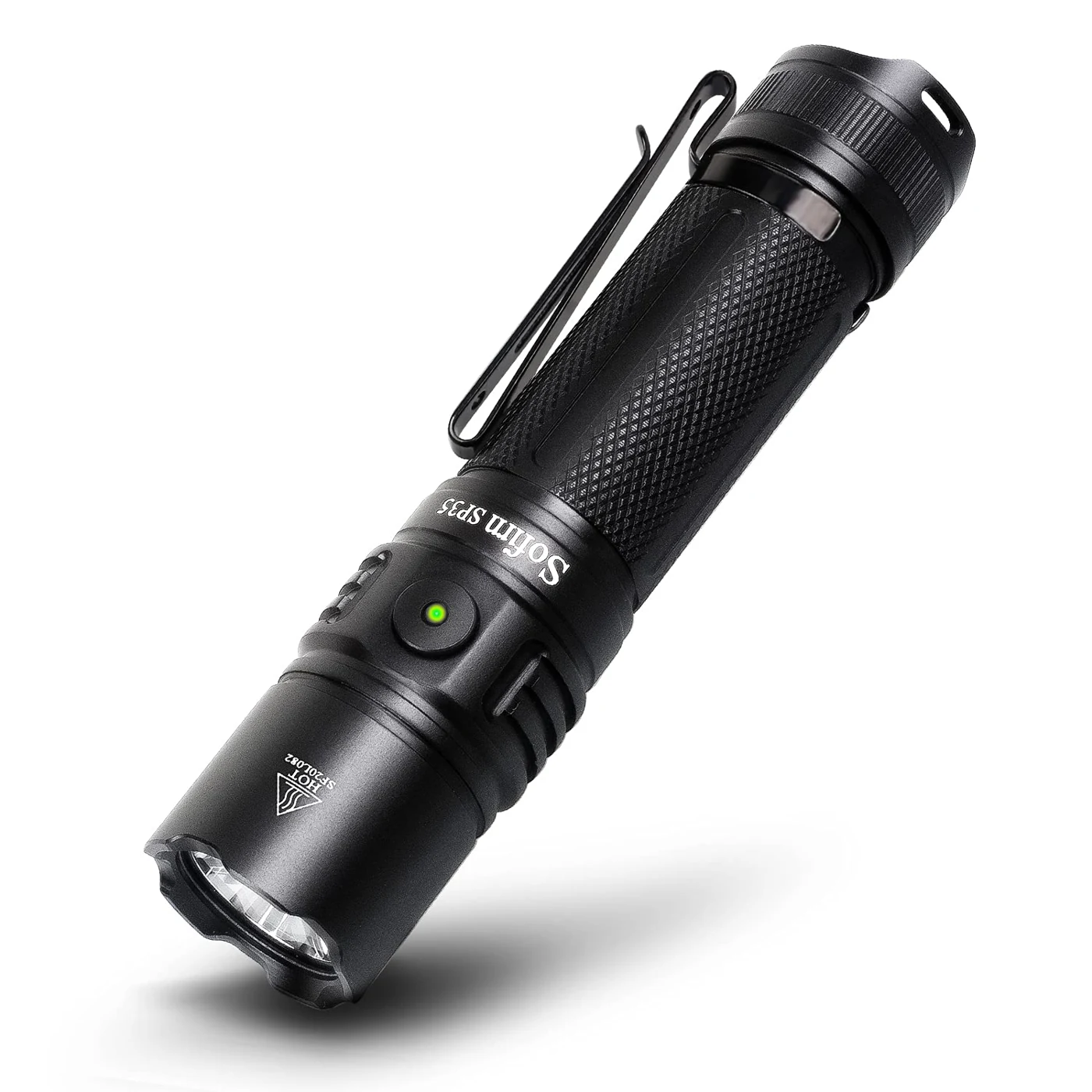
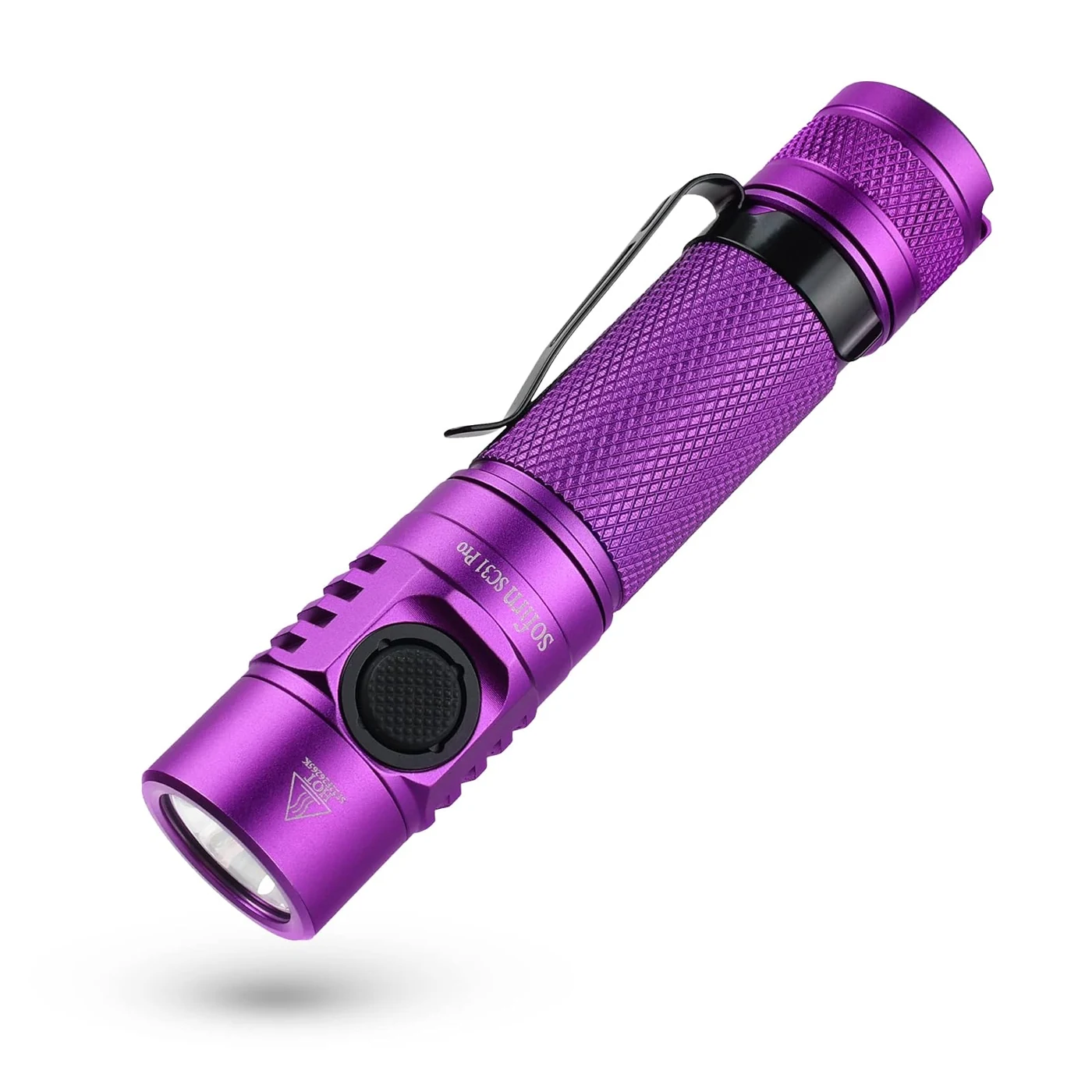
Quick take: The Sofirn SC31 Pro costs $2 less; the Sofirn SP35 throws farther (276m vs 242m).
Which one to buy
Firmware is the whole argument here, because the hardware is close. Both use a cool SST-40 at CRI 70 rated at 2,000 lumens, both run about 2 hours on high, USB-C and IPX8. The Sofirn SP35 runs a 21700 with a simple interface and no firmware to learn; the Sofirn SC31 Pro runs an 18650 with Anduril 2. The SP35 is also discontinued, so the SC31 Pro is the one you can reliably buy.
SP35 owners call it a plain, well-made light that does the obvious things right: a smooth reflector with a defined hotspot and real throw, USB-C charging at around 2A, and build quality good even ignoring the price. It has no magnet, and like other Sofirns of its generation its thermal sensor can trigger early step-down until recalibrated.
SC31 Pro owners praise full Anduril 2 at one of the lowest prices it's been sold for, a lit side switch, and deep configuration of ramp, thermal ceiling, memory and blinkies; it's cheap enough to lend. They're less happy with the beam, which several found unremarkable, and note scattered early failures and flickering units, plus no aux LEDs.
If you find a new SP35 and want simplicity and a bigger cell, it's a solid buy. For everyone else, the SC31 Pro is the current choice, and its Simple UI mode covers buyers who don't want Anduril's menus.
Sofirn SP35
Only if you find one new and want a no-fuss 21700 light with a focused beam and nothing to configure.
Sofirn SC31 Pro
For buyers who want a current, cheap Anduril 2 light on an 18650, and can live with a cool beam.
| Spec | Sofirn SP35 | Sofirn SC31 Pro |
|---|---|---|
| Price | $28 | $26 |
| Rating | — | — |
| Type | EDC | EDC |
| Lumens | 2,000 lm | 2,000 lm |
| Candela | 19,000 cd | 14,600 cd |
| Beam distance | 276m | 242m |
| Runtime | 2 hrs (high) | 2 hrs (high) |
| Battery | 21700 | 18650 |
| LED | SST-40 6500K | SST-40 6500K |
| Beam type | Balanced | Balanced |
| Modes | 5 Stepped | Ramping + Stepped |
| UI | Simple | Anduril 2 |
| IP rating | IPX8 | IPX8 |
| CRI | 70 | 70 |
| Weight | 3.5 oz | 2.4 oz |
| Dimensions | 5.1 x 1.1 in | 4.6 x 1.0 in |
| Warranty | 1 Year | 1 Year |
What owners report
Sofirn SP35
- ✓Build quality reviewers rate as good even ignoring the price
- ✓USB-C charging at around 2A — genuinely quick for a single 21700
- ✓Smooth reflector gives a well-defined hotspot and useful throw for the size
- ✓Around 2,000 lumens and 330 m of reach from a common, cheap cell
- ✓Simple to live with — no firmware to learn
- ✗Cool, low-CRI SST-40; colours look washed out next to a high-CRI light
- ✗Sofirn's thermal sensor calibration can trigger early step-down on this generation
- ✗No magnetic tailcap
- ✗Beam is unremarkable — competent rather than clean
- ✗Reviewed less widely than Sofirn's headline models, so there's less independent data
Sofirn SC31 Pro
- ✓Full Anduril at one of the lowest prices it has ever been available on
- ✓USB-C charging and a lit side switch on a simple, robust 18650 body
- ✓Deeply configurable: ramp shape, thermal ceiling, mode memory and blinkies all adjustable
- ✓Good output for the money from the SST-40
- ✓Straightforward to live with once configured, and cheap enough to be a loaner
- ✗Cool, low-CRI SST-40 — colours look washed out next to a high-CRI light
- ✗Several reviewers found the beam pattern unremarkable
- ✗Scattered reports of early failures and flickering units
- ✗Anduril's configuration menus are intimidating if this is your first enthusiast light
- ✗No aux LEDs, so it's hard to find in a dark room
Sofirn SP35 vs Sofirn SC31 Pro: common questions
Is the Sofirn SC31 Pro hard to use compared with the SP35?▾
Owners say Anduril's configuration menus can be intimidating for a first enthusiast light. They suggest starting in Simple UI and switching to the advanced interface later. The SP35 has a simple interface with no firmware to learn.
Do both lights step down early?▾
SP35 owners report that a miscalibrated thermal sensor, common on this Sofirn generation, can cause early step-down, with published fixes. SC31 Pro owners instead flag scattered reports of early failures and flickering units.