Thrunite T2 vs Thrunite T3
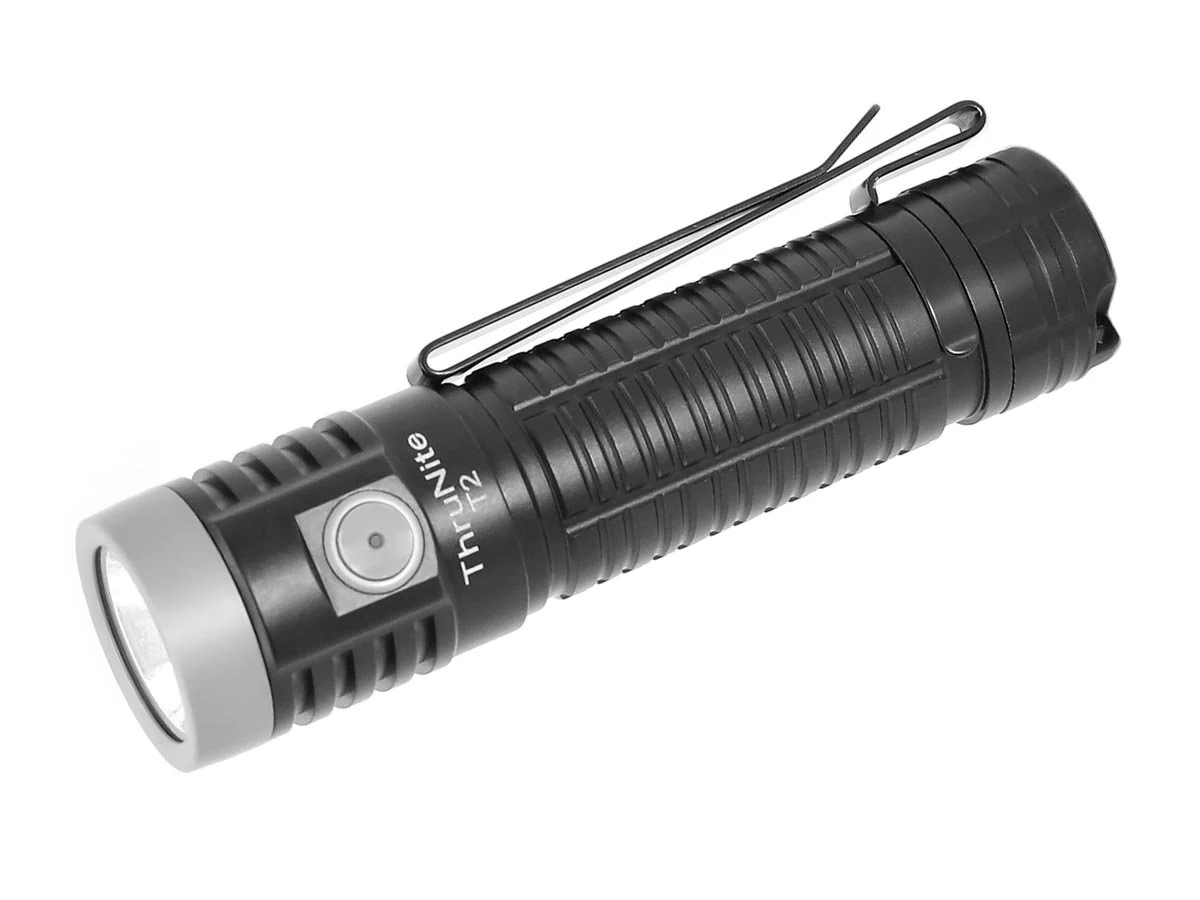
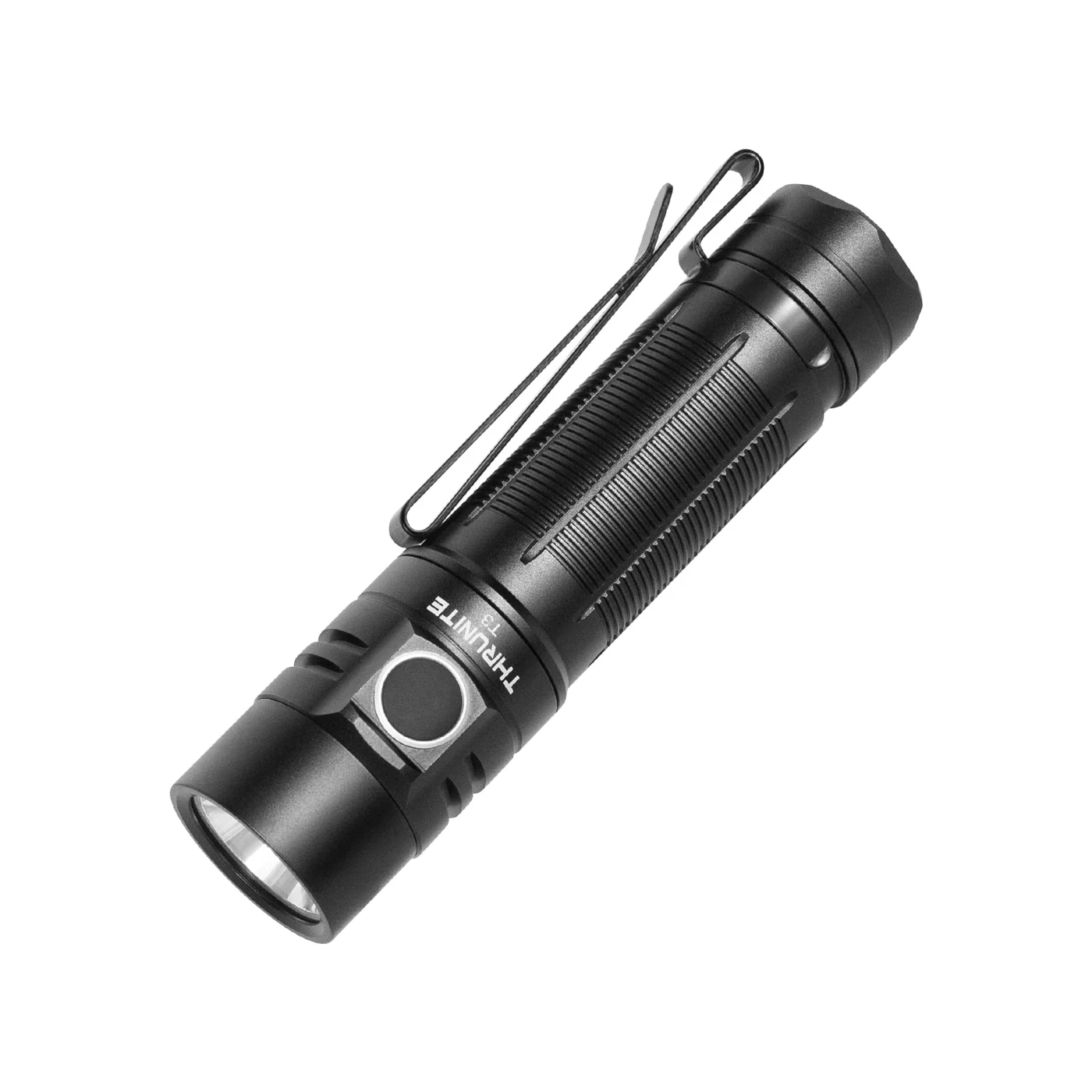
Quick take: The Thrunite T3 costs $20 less; the Thrunite T2 is brighter (3,757 vs 3,600 lm); the Thrunite T3 runs longer on high (2.5 vs 2 hrs).
Which one to buy
Neither is still made. Thrunite has discontinued both the T2 and the T3, so this matters only if you're weighing leftover stock or a used light. On paper they're near twins: same XHP70.2, same 21700, same 3.5-ounce weight, both IPX8 with USB-C and a lifetime warranty. The T3 sold for $20 less and rated for 2.5 hours on high against the T2's 2.
Owner reports separate them better than the specs do. T2 owners call it an efficient flooder pushing around 3,750 lumens, and like its interface and grip-ridged 6061-T6 body. They also run into quirks: it won't charge from a USB-C PD charger over a C-to-C cable, so you need a USB-A to C cable. Some standard 21700s need a spacer, protected cells can be too tight, and the lockout needs a long press and then another press to switch on.
T3 owners praise a natural tint, neither overly white nor blue, and a fixed-focus beam with no dim spots. Their main complaint is ergonomic: the rubber-covered charge port sits directly opposite the power button and feels the same under a thumb, so drawing it from a pocket in the dark, you can't tell which you've found.
With both gone, the T3's longer rated runtime, lower price and tint praise give it the edge if you find one. The T2's charging and cell-fit quirks are the kind you'll meet every week.
Thrunite T2
Only if you find one cheaper than a T3 and are happy to keep a USB-A charger and check cell fit.
Thrunite T3
The better of two discontinued lights, with a longer rated runtime and a tint owners praise, if you can learn the button-port layout.
| Spec | Thrunite T2 | Thrunite T3 |
|---|---|---|
| Price | $80 | $60 |
| Rating | — | — |
| Type | EDC | EDC |
| Lumens | 3,757 lm | 3,600 lm |
| Candela | 20,000 cd | 20,000 cd |
| Beam distance | 283m | 283m |
| Runtime | 2 hrs (high) | 2.5 hrs (high) |
| Battery | 21700 | 21700 |
| LED | CREE XHP70.2 | CREE XHP70.2 |
| Beam type | Balanced | Balanced |
| Modes | 5 Stepped | 5 Stepped |
| UI | Simple | Simple |
| IP rating | IPX8 | IPX8 |
| CRI | 70 | 70 |
| Weight | 3.5 oz | 3.5 oz |
| Dimensions | 5.0 x 1.1 in | 5.1 x 1.1 in |
| Warranty | Lifetime | Lifetime |
What owners report
Thrunite T2
- ✓Around 3,750 lumens from an efficient XHP70 on a 21700
- ✓Onboard USB-C charging
- ✓Well thought-out user interface
- ✓6061-T6 aluminium with grip ridges and a solid feel
- ✓Strong value for the output
- ✗Won't charge from a USB-C PD charger over a C-to-C cable — needs USB-A to C
- ✗Some standard 21700s lose contact without a spacer
- ✗Protected cells can be too tight to fit
- ✗The lockout needs a long press to unlock then another press to switch on
- ✗Too heavy to wear comfortably on a hat
Thrunite T3
- ✓Exceptionally bright for the size, with long projection from a small lens
- ✓Consistent fixed-focus beam with no dim spots or dead zones
- ✓Natural colour temperature — neither overly white nor blue
- ✓Good battery life from the 21700 with USB-C charging
- ✓Solid Thrunite build quality
- ✗The charge port sits opposite the power button and feels the same under a thumb
- ✗Ramping interface won't suit anyone who prefers discrete modes
- ✗No high-CRI option
- ✗Fixed focus, so no adjusting the beam
- ✗Throw is modest next to dedicated throwers
Thrunite T2 vs Thrunite T3: common questions
Are the Thrunite T2 and T3 still sold?▾
No, Thrunite has discontinued both. Any you find will be old stock or used, so check the battery and charging port carefully, and consider a current Thrunite 21700 model instead.
What charging problems do owners report with the T2?▾
It won't charge from a USB-C PD charger over a C-to-C cable, which catches out people using laptop and phone chargers. Use a USB-A to USB-C cable with a standard 2A charger instead and it charges normally.
What is the T3's button-and-port issue?▾
The rubber-covered charge port sits directly opposite the power button, so when you pull it from a pocket in the dark, you can't tell by feel which one your thumb has found. Owners say you learn it, but it's an avoidable design choice.