Acebeam Rider RX vs Acebeam E10 2.0
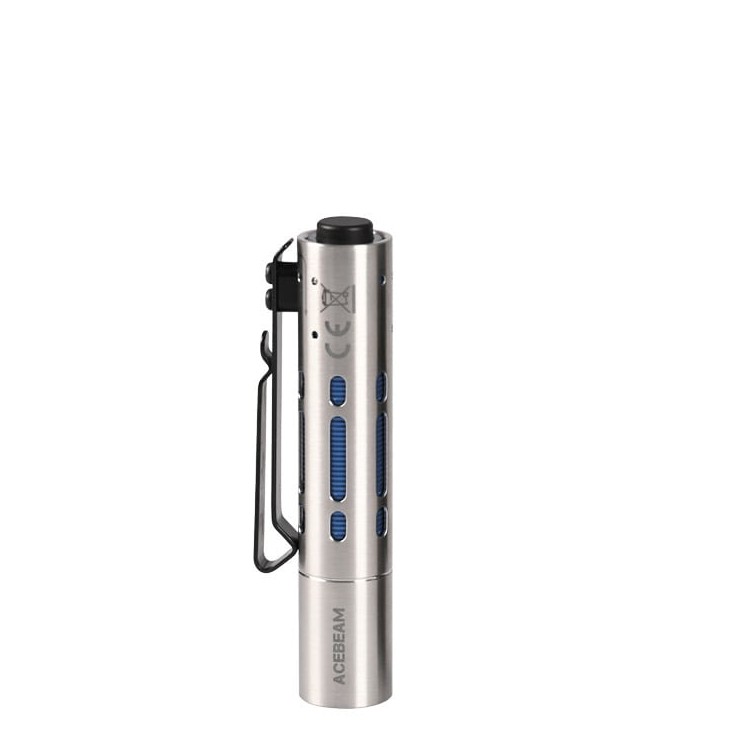
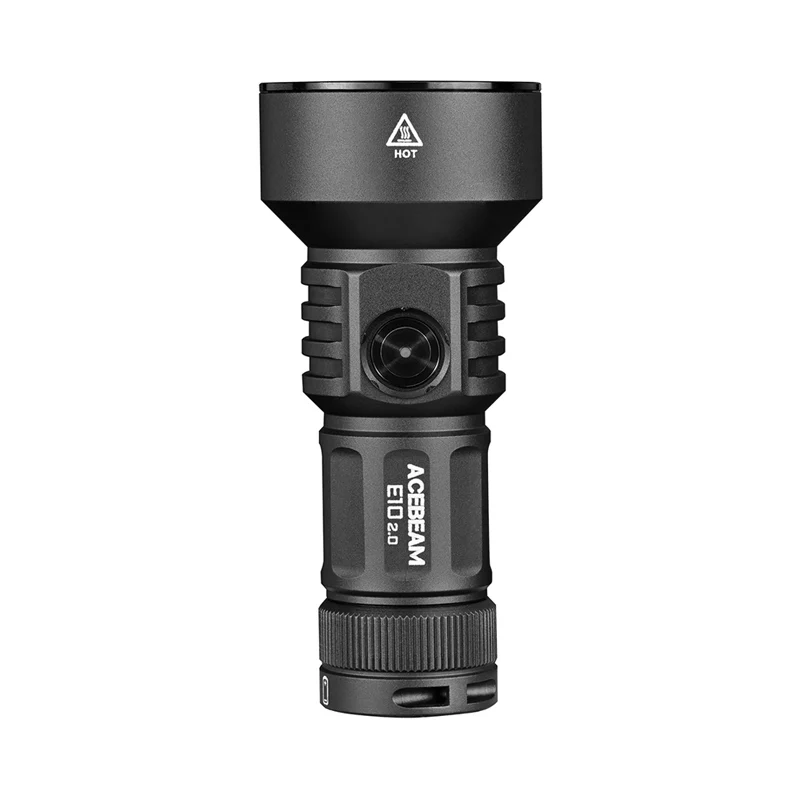
Quick take: The Acebeam Rider RX costs $10 less; the Acebeam E10 2.0 is brighter (1,200 vs 650 lm); the Acebeam E10 2.0 throws farther (715m vs 96m); the Acebeam E10 2.0 runs longer on high (1.5 vs 1 hrs).
| Spec | Acebeam Rider RX | Acebeam E10 2.0 |
|---|---|---|
| Price | $50 | $60 |
| Rating | — | — |
| Type | EDC | Thrower |
| Lumens | 650 lm | 1,200 lm |
| Candela | 2,300 cd | 127,806 cd |
| Beam distance | 96m | 715m |
| Runtime | 1 hr (high) | 1.5 hrs (high) |
| Battery | AA/14500 | CR123A |
| LED | Nichia 219F 5000K | Cree XP-LR |
| Beam type | Flood | Throw |
| Modes | 4 Stepped | 4 Stepped |
| UI | Simple | Simple |
| IP rating | IP68 | IP68 |
| CRI | 90 | 70 |
| Weight | 2.9 oz | 3.8 oz |
| Dimensions | 3.8 x 0.7 in | 3.5 x 1.0 in |
| Warranty | 5 Year | 5 Year |
What owners report
Acebeam Rider RX
- ✓High-CRI Nichia 219F in an AA/14500 light
- ✓Bolt-action fidget clip that some owners find genuinely calming
- ✓Type III hard-anodised aluminium with good heat dissipation
- ✓1,000 lumens from a widely available cell format
- ✓Rated 4.5 out of 5 by a reviewer despite the regulation criticism
- ✗Output isn't regulated on 14500 — it dims as the cell drains
- ✗Every mode uses PWM, though it's well implemented
- ✗Forward-clicky tail makes mode changes awkward with the light on
- ✗Longer than most of its direct competition
- ✗Not enough texture for wet or gloved hands, and charging is slow
Acebeam E10 2.0
- ✓715 m of reach from an 88 mm, 106.5-gram body
- ✓Custom TIR optic gives a clean, controlled beam with good transmission
- ✓AL6061-T6 hard-anodised, IP68 rated and drop-tested to 1.5 m
- ✓USB-C rechargeable 16340 with CR123A compatibility as a fallback
- ✓Proves the point that throw comes from optics, not lumens
- ✗Very little spill — awkward for anything at arm's length
- ✗Short runtime from a 16340 at high output
- ✗1,200 lumens is modest if you want area coverage
- ✗Low CRI, as with any throw-oriented emitter
- ✗Small cell means high output is a burst